.svg)

.svg)

The wealth management industry is becoming more complex each year. Advisors and institutions now manage portfolios that span public markets, private equity, real estate, and alternative assets, all while navigating stricter regulations and rising client expectations. In this context, a key question increasingly defines technology decisions across the industry: what is wealth management software, and why has it become essential for sustainable growth?
Wealth management software is a comprehensive digital solution that helps financial professionals consolidate data, manage portfolios, automate workflows, ensure compliance, and deliver a modern client experience. Unlike fragmented legacy systems, modern platforms are built to unify operations and provide a single source of truth for both advisors and clients.
Understanding the Role of Wealth Management Software
At its core, wealth management software supports the full lifecycle of portfolio and client management. It replaces spreadsheets, disconnected tools, and manual processes with an integrated platform that centralizes information and streamlines daily work.
Key functions typically include:
- Portfolio management and analytics
- Multi-custodian data aggregation
- Automated reporting and dashboards
- Compliance and audit trail management
- Client communication and engagement tools
By bringing these capabilities together, firms gain clarity, efficiency, and control across increasingly diverse portfolios.
How Modern Platforms Address Portfolio Complexity
Today’s client portfolios rarely consist of traditional equities alone. Advisors manage combinations of stocks, bonds, private equity, real estate, and other non-standard assets. Wealth management software is designed to handle this complexity without sacrificing usability.
Modern platforms enable:
- A consolidated client view across all asset classes
- Performance analysis and benchmarking over time
- Order management and portfolio rebalancing
- Cash flow and liquidity forecasting
- Risk analysis and compliance checks
This unified approach ensures that decisions are based on complete, accurate data rather than partial views spread across systems.
Reporting, Transparency, and Regulatory Confidence
Regulatory requirements continue to expand, placing greater pressure on firms to deliver accurate, timely, and auditable reporting. Wealth management software plays a central role in meeting these obligations while reducing manual effort.
Advanced reporting capabilities typically include:
- Customizable dashboards for advisors, administrators, and clients
- Automated reporting for regulatory frameworks such as MiFID and ESG
- Immutable audit trails and onboarding records
- Centralized KYC and compliance documentation
By automating reporting and compliance workflows, firms reduce risk while maintaining transparency for both regulators and clients.
Best Wealth Management Software: What Sets Leading Platforms Apart
Choosing the best wealth management software goes beyond checking feature lists. The most effective platforms are those that adapt to different business models, scale with growth, and evolve alongside regulatory and market changes.
Key characteristics of leading platforms include:
- Scalability from boutique firms to enterprise-level operations
- Custom implementation aligned with firm workflows and branding
- Flexible pricing structures, often combining fixed fees with AUM-based models
- Intuitive user interfaces that reduce training time
- Continuous product improvement driven by client feedback
Rather than forcing firms to adapt to rigid systems, the best platforms adapt to the firm.
Multi-Custodian Data Aggregation as a Foundation
One of the most critical capabilities of modern wealth management software is multi-custodian data aggregation. Advisors often work with multiple custodians, brokers, and institutions, making data consistency a major challenge.
Advanced platforms support:
- Automatic synchronization of holdings and transactions
- Coverage across diverse asset classes
- Blending automated feeds with manual entries for rare or complex assets
This ensures that advisors always have a complete and accurate picture of client wealth, regardless of where assets are held.
Automation and Operational Efficiency
Operational efficiency is no longer a competitive advantage, it is a requirement. Wealth management software reduces administrative burden by automating repetitive and time-consuming tasks.
Common automation tools include:
- Portfolio rebalancing based on predefined rules
- Alerts for market changes, compliance triggers, or client milestones
- Task tracking and workflow automation
- Integrated client communication through in-app messaging
By automating routine processes, teams can focus more on high-value client engagement and strategic planning.
White-Labelled Digital Client Experience
Client expectations have evolved alongside consumer technology. A modern digital experience is now a standard requirement, not a differentiator. Wealth management software supports this through white-labelled portals and apps that reflect each firm’s brand.
White-label capabilities typically allow firms to:
- Apply logos, colors, and design elements
- Deliver consistent branding across web and mobile interfaces
- Provide clients with real-time portfolio visibility
- Strengthen trust through a professional, cohesive experience
This branded digital presence reinforces credibility while improving client satisfaction.
Security, Compliance, and Trust
Handling sensitive financial data requires the highest security standards. Modern wealth management software is built with security and compliance at its foundation.
Key security features often include:
- ISO 27001 certification and advanced encryption
- Role-based access controls and permissions
- Centralized logging for regulatory compliance
- Alignment with global frameworks such as MiFID and SFDR
These measures protect both firms and clients while supporting long-term regulatory resilience.
Supporting Private Markets and Complex Assets
Private markets play an increasingly important role in wealth management strategies. Software platforms now offer dedicated tools for tracking private equity, real estate, and other complex investments.
These tools typically support:
- Centralized deal tracking and documentation
- Valuation management and custom fields
- Timeline and commitment oversight
- Support for collectables and venture capital
This functionality ensures that private assets are managed with the same rigor as public investments.
Integrations and Future-Proof Architecture
Wealth management software must integrate seamlessly with existing technology stacks. Open APIs and pre-built integrations enable firms to connect accounting systems, broker platforms, and third-party tools without disruption.
Modern platforms often offer:
- Open APIs and SDKs for extensibility
- Custodian and broker integrations
- Synchronization with back-office systems
- Support for compliant AI-driven tools and agents
This extensibility ensures the platform remains adaptable as technology and regulations evolve.
Performativ as a Holistic Wealth Management Solution
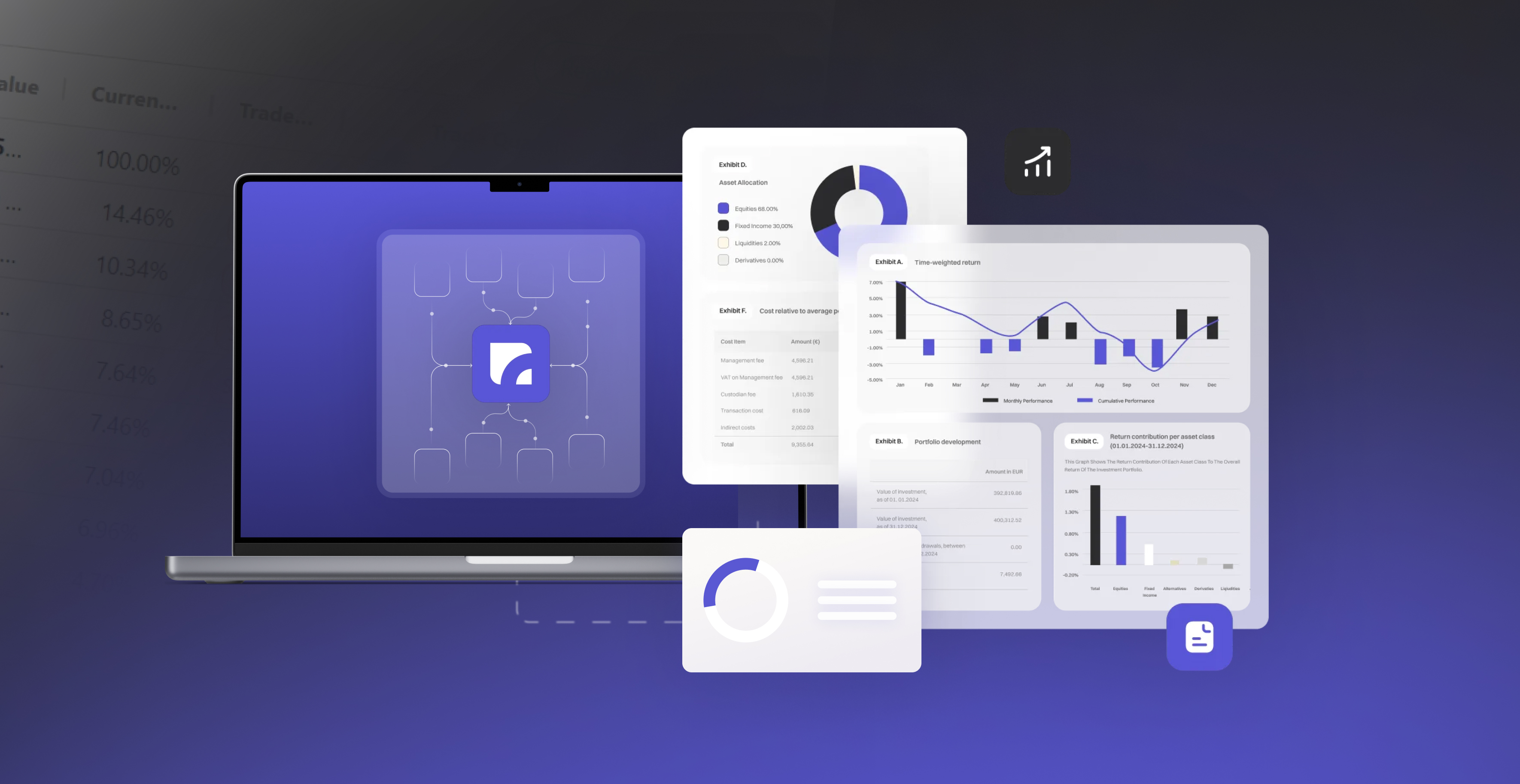
Performativ exemplifies how modern wealth management software brings all these elements together. Built as a platform for the future, it consolidates portfolio management, analytics, automation, compliance, reporting, and client engagement into a single, scalable system.
By focusing on customization, security, and continuous innovation, Performativ supports wealth managers, asset managers, banks, advisors, and multi-family offices in simplifying complexity and unlocking growth. More details about its capabilities can be explored here.
Final Thoughts
A clear understanding of wealth management software is essential for firms operating in today’s financial landscape. It is not simply a technical upgrade but a strategic foundation that shapes efficiency, compliance, and client experience.
The best wealth management software empowers professionals to manage complexity with confidence, scale without friction, and deliver a modern, transparent service to clients. As expectations continue to rise, platforms that combine holistic functionality with adaptability will define the future of wealth management.