.svg)

.svg)

The Growing Challenge of Custodian Data
Wealth and asset managers are operating in an increasingly complex financial landscape. Clients often spread their wealth across multiple custodians, geographies, and asset classes to achieve diversification and mitigate risk. While this strategy benefits investors, it leaves firms managing a sprawling web of data feeds, formats, and reporting requirements.
The result is often a situation many firms know too well: custodian data chaos.
Without the right tools, operations teams are left reconciling data manually, piecing together spreadsheets, and troubleshooting discrepancies that appear at month-end or quarter-end. Advisors spend more time ensuring the numbers are accurate than they do speaking with clients. And leadership teams struggle to extract meaningful insights from fragmented information.
The consequences are serious:
- Errors undermine trust. A single incorrect figure in a report can lead to uncomfortable client conversations and lost credibility.
- Operational drag. Teams waste valuable hours reconciling accounts instead of focusing on client strategy.
- Reporting delays. When data arrives late or needs manual intervention, client reports are delayed, eroding confidence in the firm’s professionalism.
- Compliance risks. Inconsistent or incomplete data increases the likelihood of errors in regulatory reporting, which can expose firms to fines and reputational damage.
In a marketplace where clients expect both speed and accuracy, custodian data chaos is not sustainable. Wealth and asset managers need a new approach to managing the flow of information.
Why Custodian Data Aggregation Matters
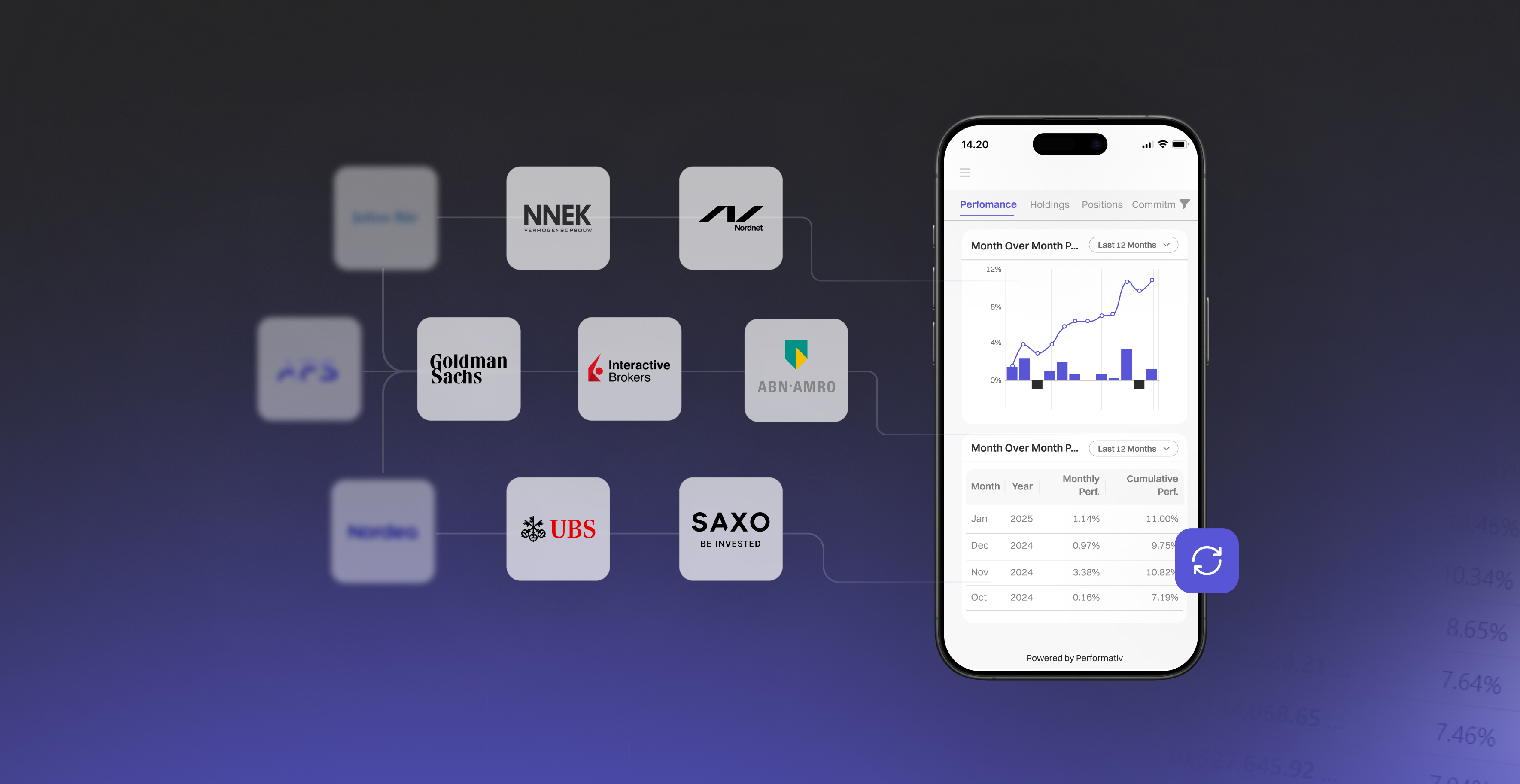
Custodian data aggregation brings order to the chaos. It consolidates information from multiple custodians into a single, unified platform, ensuring that wealth managers always have access to a complete and accurate view of their clients’ portfolios.
Instead of logging into multiple portals or waiting for end-of-month feeds, firms can rely on real-time, automated integration that delivers up-to-date valuations, transactions, and holdings.
The benefits of custodian aggregation fall into three critical areas:
1. Operational Efficiency
Manual data entry and reconciliation are not only time-consuming but also prone to human error. By automating custodian feeds into a portfolio management software solution, firms can eliminate repetitive tasks, reduce operational costs, and reallocate staff to higher-value activities.
Automation also allows for scalability. A firm that relies on spreadsheets may find it can only manage a certain number of accounts before the workload becomes unmanageable. With a modern wealth management platform, that ceiling disappears, allowing firms to serve more clients without a corresponding increase in back-office resources.
2. Client Reporting and Transparency
Today’s investors expect timely, accurate, and comprehensive reporting. They want to see the full picture of their wealth, including public markets, alternatives, and held-away assets, in one report.
Custodian aggregation makes this possible by consolidating disparate data into holistic reports. Instead of showing partial snapshots, advisors can provide clients with a single view of all their investments.
This transparency strengthens trust. When clients feel confident that their advisor has complete oversight of their portfolio, they are more likely to deepen the relationship, consolidate assets, and recommend the firm to others.
3. Compliance and Risk Management
Regulators around the world continue to increase scrutiny on wealth and asset managers. Accurate record-keeping, audit trails, and timely reporting are non-negotiable. Yet compliance becomes extremely difficult when data lives in silos across multiple custodians.
Custodian aggregation simplifies compliance by centralizing data. Automated feeds ensure that transactions are recorded accurately and in real time, reducing the risk of omissions or errors. With a complete dataset at hand, firms can generate compliance reports faster and more reliably, reducing the risk of regulatory fines.
The Strategic Advantage of Efficient Data Management
For many firms, custodian aggregation begins as a back-office efficiency project. But its impact quickly becomes strategic.
Wealth managers who successfully implement custodian aggregation gain several competitive advantages:
- Scalability. Firms can grow without proportionally increasing headcount. This improves margins and makes growth sustainable.
- Accuracy. Automated reconciliation reduces costly errors, ensuring that both internal teams and clients can trust the data.
- Advisor focus. Advisors spend less time troubleshooting reports and more time building client relationships and providing strategic advice.
- Client loyalty. Providing a seamless reporting experience differentiates a firm in a crowded marketplace, improving retention and referrals.
In other words, efficient data management isn’t just about operational convenience. It’s a driver of long-term business success.
Moving Beyond Chaos with the Right Wealth Management Platform
While the concept of custodian aggregation is simple, execution can be complex. Not all solutions are created equal. The best wealth management platforms go beyond basic data feeds and deliver functionality that truly transforms operations.
Here are key capabilities firms should look for:
- Multi-Custodian Integration: A robust portfolio management platform should support integrations with a wide range of custodians. This ensures scalability as the firm grows and adds new client relationships.
- Holistic Portfolio Management: Beyond custodial data, the platform should accommodate alternative investments, private equity, and held-away accounts. This creates a complete view of wealth for both advisors and clients.
- Advanced Reporting Tools: Look for investment reporting software that allows for customizable, client-friendly reports. Clients value not just accuracy but also clarity and usability.
- Compliance and Audit Trails: Compliance is easier when data is automatically logged, time-tamped, and reconciled. The platform should generate audit-ready records at the click of a button.
- Scalability and Flexibility: As firms expand, their technology should scale with them. A modern digital wealth platform offers cloud-based flexibility, regular updates, and integrations with other tools in the advisor tech stack.
Firms that invest in platforms with these capabilities are not just solving today’s custodian chaos, they are building a foundation for long-term success in digital wealth management.
Practical Steps for Wealth Managers
For firms considering custodian data aggregation, the path forward often involves a few practical steps:
- Audit existing processes. Understand where manual work, errors, or inefficiencies currently exist.
- Identify custodians. List all custodians used across client relationships and assess integration capabilities.
- Evaluate technology. Compare portfolio management systems to see which align with your firm’s needs.
- Plan change management. Implementing new systems requires buy-in from both advisors and operations teams. Communicate benefits clearly.
- Test and measure. Roll out custodian aggregation with a subset of accounts, monitor results, and scale gradually.
By approaching implementation strategically, firms can maximize adoption and return on investment.
Turning Data Chaos into a Competitive Edge
Custodian data chaos is one of the biggest hidden costs in wealth and asset management. It drains operational resources, delays reporting, and undermines client trust.
The solution lies in custodian data aggregation, centralizing, automating, and simplifying the flow of information. By adopting modern portfolio management systems with integrated custodian aggregation, firms can achieve greater efficiency, provide transparent reporting, and strengthen compliance.
More importantly, they can free advisors to do what they do best: build relationships, deliver strategic advice, and help clients achieve their financial goals.
Wealth management is no longer just about managing assets; it is about managing data with precision. Firms that embrace this reality will be the ones that thrive in the next era of digital wealth management.